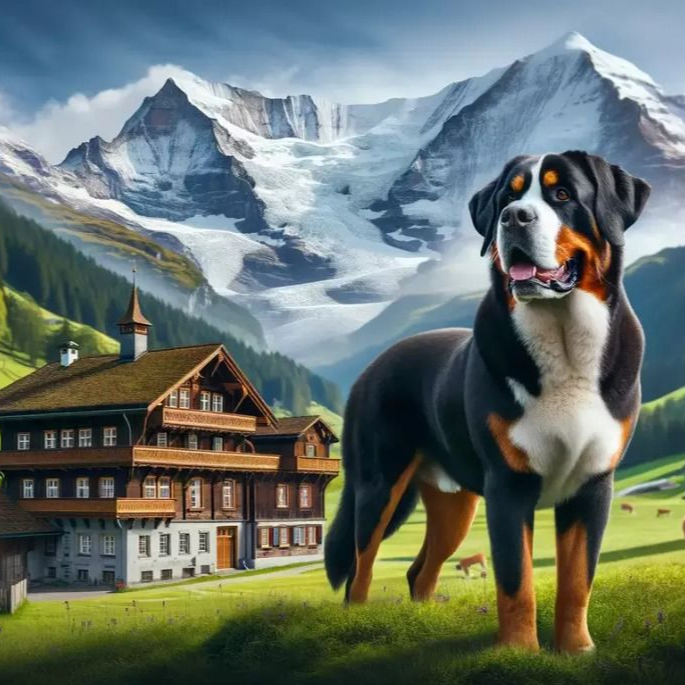
For centuries, dogs from mountainous regions have helped people herd and guard livestock, transport cargo, and work in difficult conditions. They were valued for their strength, endurance and ability to cooperate with humans. At the same time, the expression “mountain breeds of dogs” unites animals of different origins and purposes, and not one breed with the same needs.
In this review, the main attention is paid to the Swiss Mountain Dogs and the smallest representative of this four – the Entlebucher. Let’s look at how it differs from the Bernese, Greater Swiss and Appenzeller Mountain Dogs, and also get acquainted with other famous dogs of mountain regions.
Why did people need mountain dogs?
In Swiss farms, dogs performed various tasks: drove livestock, guarded the yard and helped transport goods. The work required a strong build, attentiveness and endurance. These features are still reflected in the appearance and behavior of the breeds.
Mountain dogs are not necessarily uniformly large or long-haired. For example, the Entlebucher is noticeably more compact than the Greater Swiss Mountain Dog, and its short coat is different from the long coat of the Bernese. Living conditions and historical purpose are important for understanding the breed, but do not replace getting to know the individual dog.
Entlebucher Mountain Dog
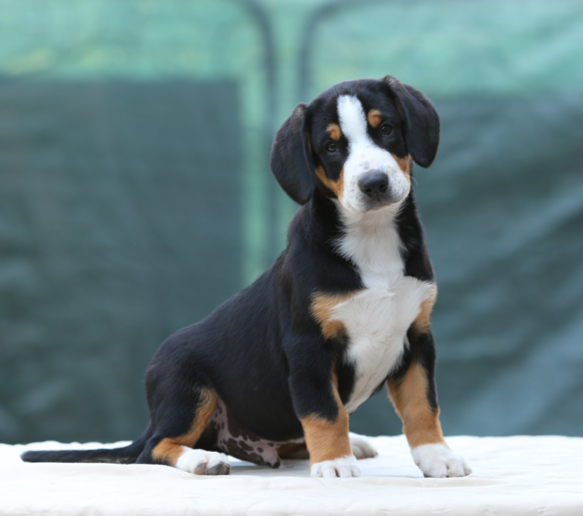
The Entlebucher is the smallest of the four Swiss Mountain Dogs. He retains the strength and stamina of a working dog while remaining compact, agile and agile. Its ancestors were livestock helpers, and today it is also found as a family companion.
Main provisions of the standard
FCI Standard No. 47 describes the Entlebucher as a compact tri-colored dog with a slightly elongated format. When assessing appearance, proportions and movements are taken into account, and not just height or a single striking feature.
- Height: males 44–50 cm, females 42–48 cm; We allow heights up to 52 and 50 cm, respectively.
- Wool: short, close-lying, hard and shiny, with a thick undercoat.
- Color: black base color, tan markings and white markings.
- Head: proportional to the body, slightly wedge-shaped; The eyes are relatively small, from dark brown to hazel.
- Behavior: lively, confident and teachable; loyal to people he knows, may be wary of strangers.
The Entlebucher belongs to FCI Group 2, which includes Pinschers, Schnauzers, Molossers, Swiss Mountain dogs and Cattle Dogs. An official standard is important for breeding and conformation evaluation. The future owner also needs to understand the breed’s needs for communication, training and activity.
Why is entlebucher interesting?
Its compactness is convenient in many everyday situations, but does not mean a low need for exercise. This is an active dog that is interested in working together with a person. Walks, games, training and suitable sports help harness her energy and intelligence.
Compared to larger Mountain Dogs, the Entlebucher appears to be a particularly agile companion. When choosing, it is important to evaluate not only the comfortable size, but also whether its temperament suits the family.
Bernese Mountain Dog
The Bernese Mountain Dog is one of the most recognizable representatives of the Swiss four. It is significantly larger than the Entlebucher and has long hair. The common tri-color coloration makes the relationship noticeable outwardly, but the size, grooming, and manner of movement of these dogs differ.
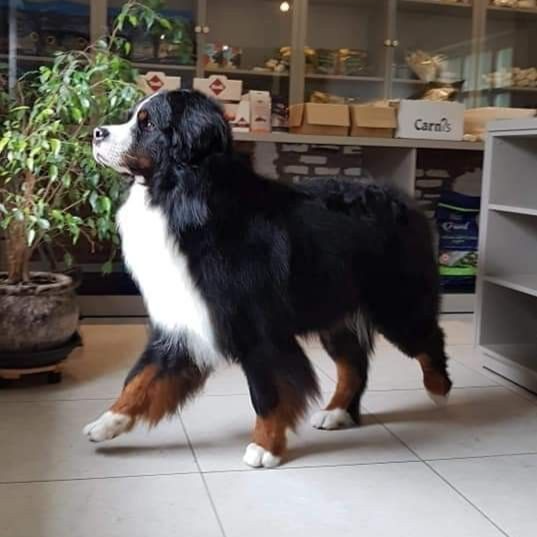
Historically, Bernese Mountain Dogs were versatile farm assistants: they guarded farms, participated in working with livestock and transporting goods. Their strong build was suitable for these tasks. Today, many owners value Bernese dogs as family dogs.
The Bernese Mountain Dog is often described as a friendly and relatively calm companion. This is a general breed description and not a promise that all puppies will have the same character. A large dog still needs training, walks and rules for calm communication with people.
The long coat requires more care than the short coat of the Entlebucher: it must be brushed regularly, checking for areas where tangles may form. When choosing, also take into account space in the house, transportation and the features of everyday life with a large animal.
Greater Swiss Mountain Dog
The Greater Swiss Mountain Dog is the largest of the four Swiss Mountain Dogs. His powerful physique was associated with work that required strength: transporting goods, guarding the farm and helping with livestock.
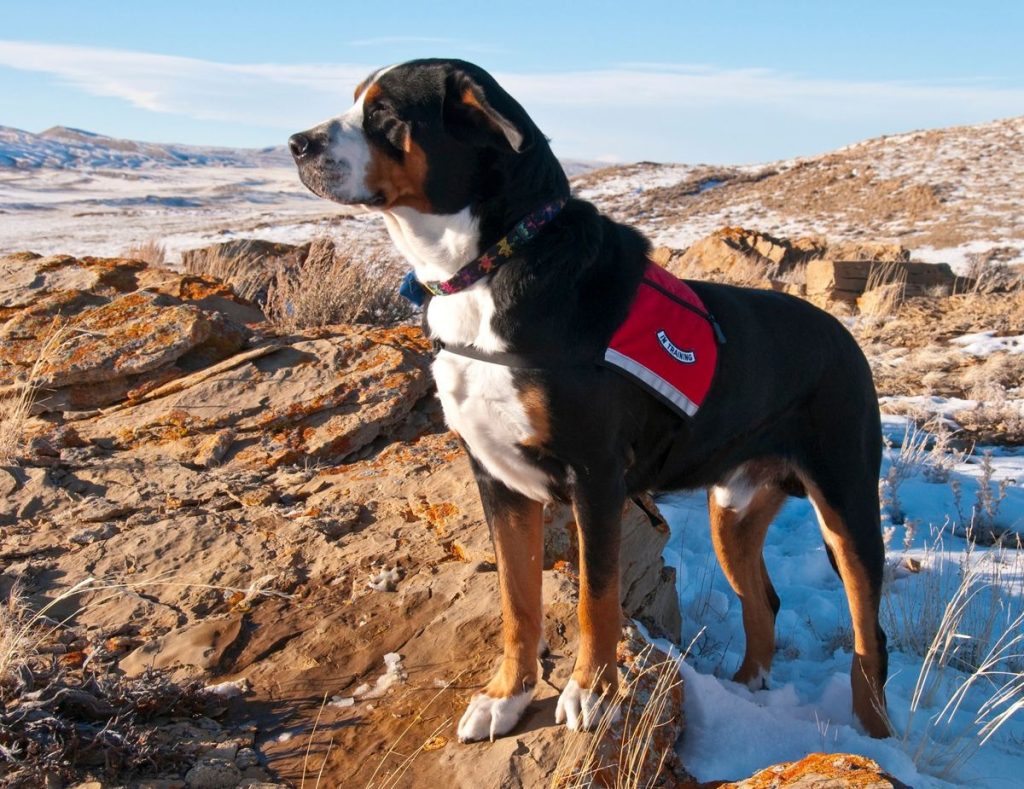
Like the Entlebucher, it has a short, dense coat, but differs markedly in size and overall appearance of massiveness. The Greater Swiss Dog is chosen by people who are close to the character of a large working companion and who are willing to take into account his physical strength.
Devotion to the family and attentiveness to the environment are combined with the need for early education. Walking calmly on a leash, restraint when greeting guests and grooming habits are especially important when the dog grows large. Socialization helps her perceive people and new situations more confidently.
Impressive appearance should not be the only argument when choosing. Consider the living conditions, the possibility of transportation, the cost of care and the willingness of all family members to interact with a strong dog.
Appenzeller Mountain Dog
The Appenzeller is another medium-sized Swiss Mountain Dog prized for its agility, intelligence, and energy. Like the Entlebucher, he has historically worked with livestock, so movement, alertness and responsiveness are important to his behavior.
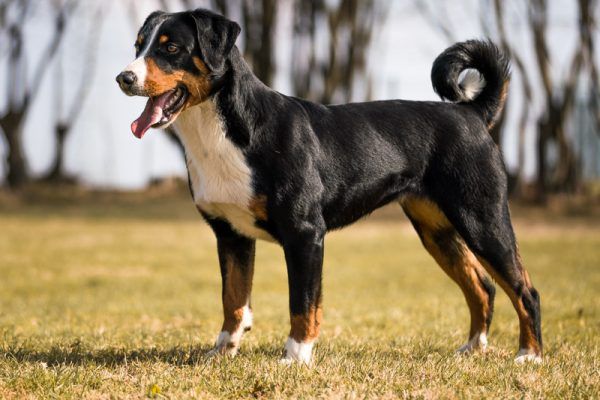
The breed is known for its ringing voice and tendency to warn of unusual events. For a farmer’s helper this was a useful quality; In modern city life, the owner needs to pay attention to the reaction to noise and the ability to calm down.
The Appenzeller can be reserved with strangers and become closely attached to family. Gradual exposure to the outside world and consistent training help develop controlled behavior. An active family who is ready to take care of a dog may be interested in this temperament.
If you are choosing between an Appenzeller and an Entlebucher, get to know adults of both breeds if possible. Similar colors do not mean similar habits, and observing real dogs is more useful than comparing photographs.
Other dogs of mountain regions
Outside the Swiss Mountain Dog group, there are also breeds with a long history of working in the mountains. Their tasks could differ significantly: from helping travelers to independently protecting herds.
Saint Bernard
St. Bernard is associated with the history of the Alpine Refuge of the Grand St. Bernard Pass and helping people in the mountains. The breed is known for its large size, strength and generally calm demeanor. This story made the St. Bernard one of the symbols of the rescue dog.
In family life, it is especially important to consider the size of an adult animal. Even a friendly dog needs training and supervision when interacting with children. A calm temperament does not replace the need for thoughtful care and suitable walks.
Pyrenean mountain dog
The Pyrenees Mountain Dog originates from the mountainous regions of France and was historically used to guard herds. This is a large dog with thick light hair. Unlike cattle work, guarding the herd required independent decisions and constant vigilance.
This story helps to understand her independence and attentive attitude towards territory and strangers. Attachment to the family does not automatically make it easy to raise. It is useful for the future owner to study in detail the characteristics of guard herding breeds and the requirements for living conditions.
What do these breeds have in common and why are the differences important?
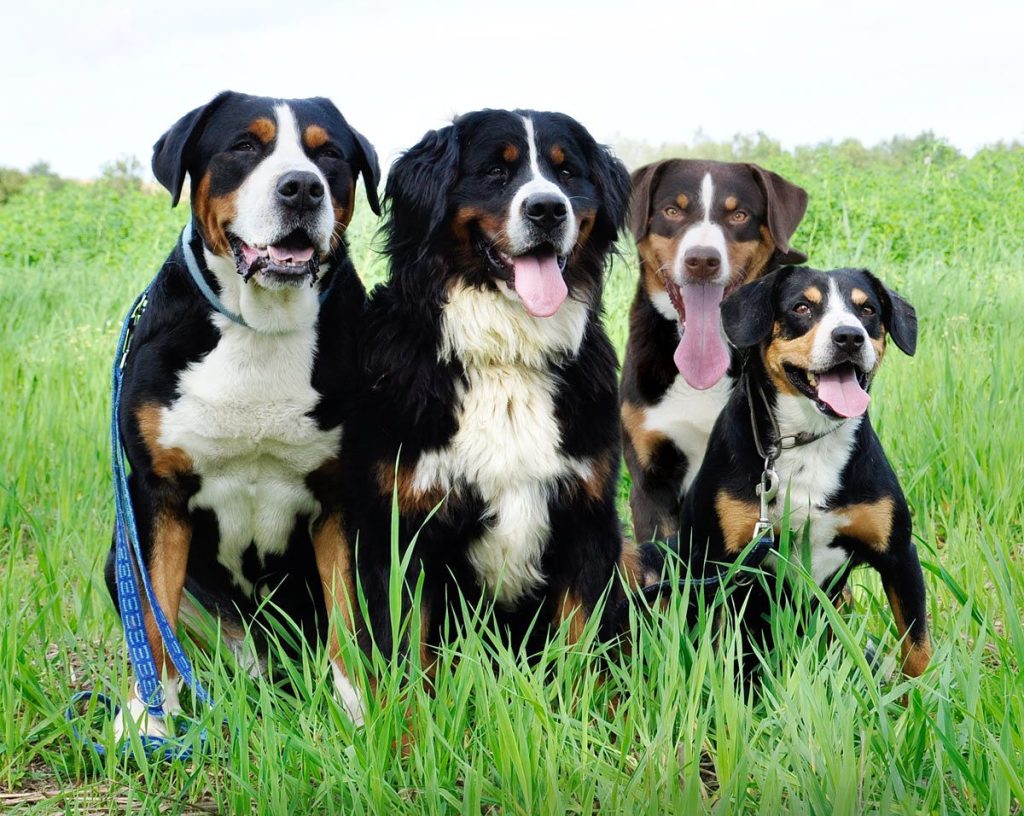
A common working background explains many of the similarities: strong build, endurance, alertness and a bond with man or herd. However, the tasks of different breeds differed, and with them, sizes, coats, independence and ways of responding to the outside world.
Any mountain dog cannot be considered equally suitable for sports, life in the yard or a family with children. Weather resistance also depends on breed, age and health. The name “mountain” does not mean that the dog does not need protection from the heat, shelter and care.
Before choosing, study the standard, talk to the breeder and evaluate the family’s normal routine. Daily walks, training, grooming, transportation options, and a willingness to socialize with the dog for many years are important.
How to choose your companion
Entlebucher is interesting due to its combination of compact size and pronounced working qualities. Other Mountain Dogs offer a different scale and character traits, while the Saint Bernard and Pyrenean Mountain Dog have their own history and purpose. Making better choices starts with understanding these differences.
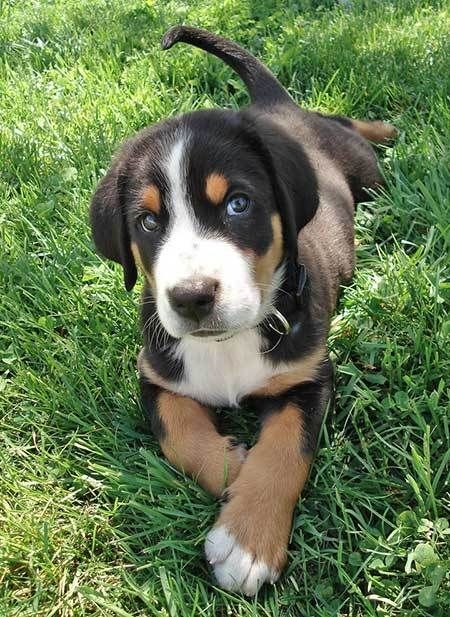
If you are close to an active life together with an Entlebucher, read more about his temperament and look puppies from kennel ISOLA DEI TESORI. You can discuss a specific baby and the terms of acquaintance via kennel contacts.
Adapted from the article A Comprehensive Guide to Mountain Dog Breeds. Entlebucher’s description verified with FCI standard No. 47.